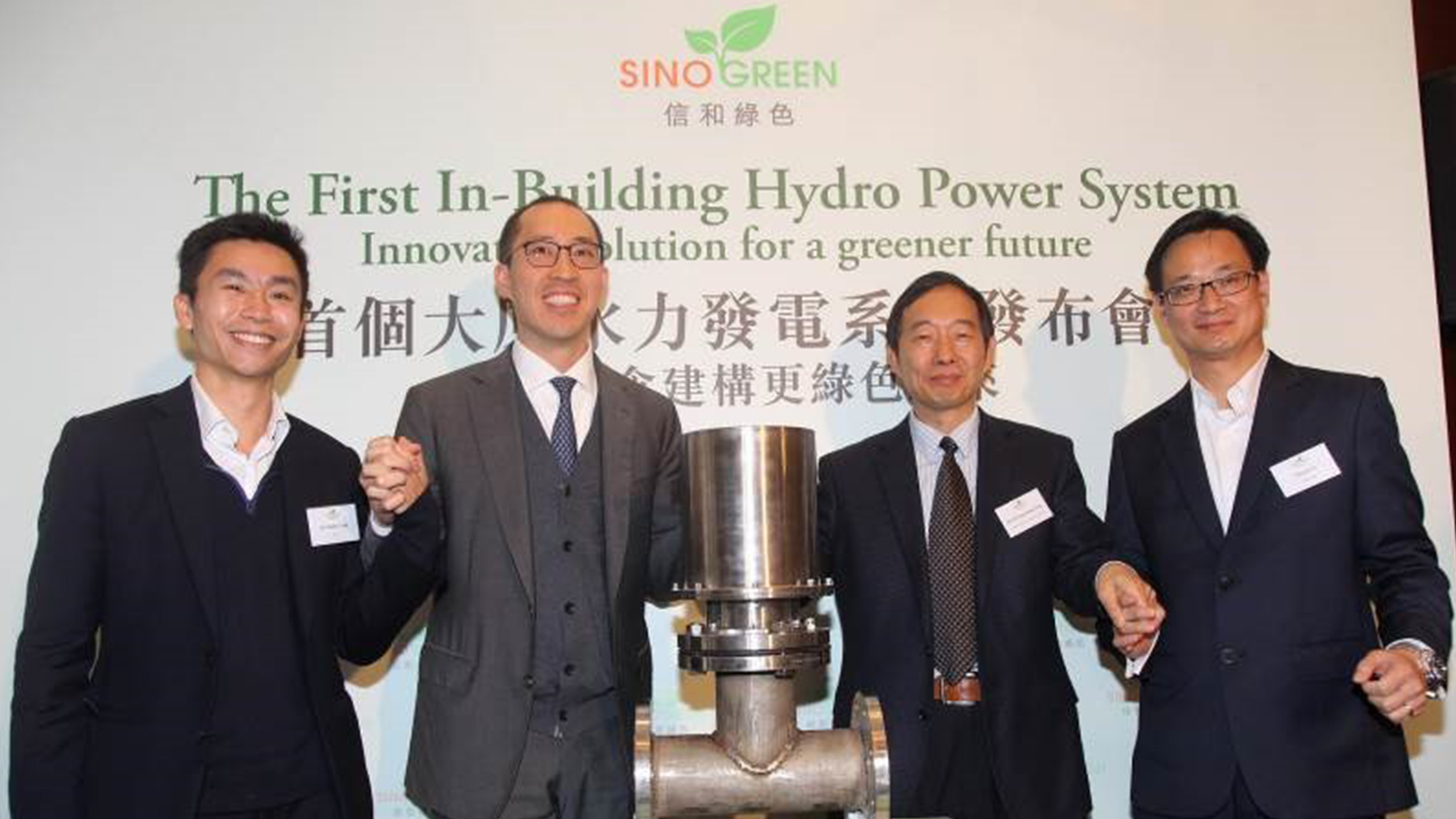


Hong Kong, 3 December 2014….. Sino Group, Arup and The Hong Kong Polytechnic University unveil a research project on the first in-building hydro power that makes use of unused water head in pipelines. The study has achieved encouraging preliminary results, generating hydroelectricity in a green and low-cost way while reducing carbon emissions.
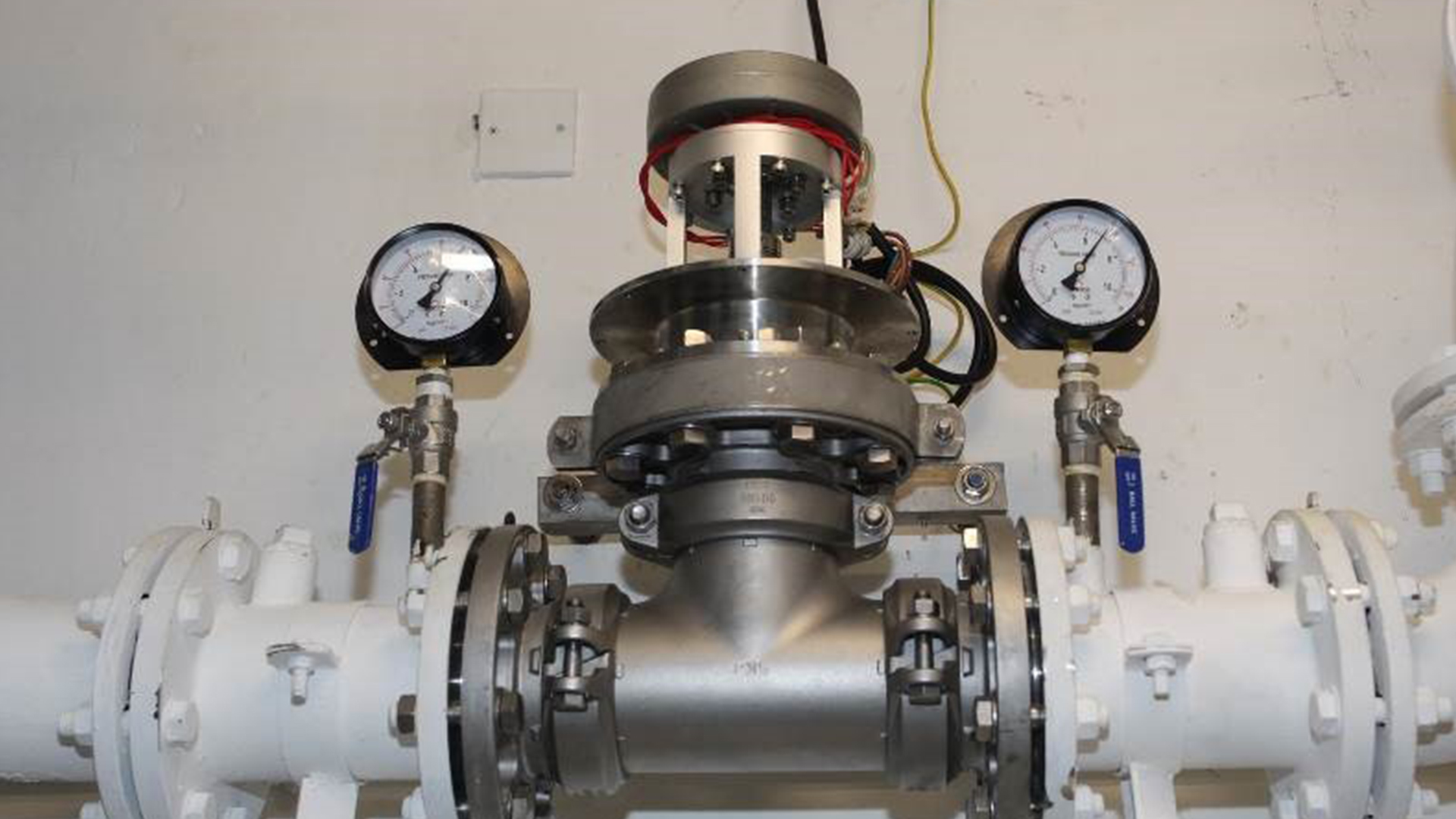
Installed at Olympian City 2, the prototype is the second phase of hydro power research and the generator (output: 100Wh) represents a six-fold leap from the first phase. Under the model, water current passing through the pipe drives a novel vertical-axis turbine developed by The Hong Kong Polytechnic University and Water Supplies Department, which generates hydroelectricity from water pipelines. Electricity generated is stored in a battery, and can be used to power a typical lift lobby’s lighting system. Assuming a typical lift lobby with 15 LED lights, each with a consumption of 6.5W, this can translate into a saving of HK$3.51 per day or HK$1,281.15 per annum for one floor. About 700 kg of carbon dioxide emission can be saved each year, which is equivalent to about 30 trees.
Professor H X Yang, Coordinator of the Renewable Energy Research Group (RERG) of the Department of Building Services Engineering of The Hong Kong Polytechnic University, is collaborating with Sino Group to develop this technology. He thinks that hydroelectricity has been widely considered as a green and low-cost approach to generate electricity and an added merit of this application is that it makes use of the unused water head in the potable water pipelines, making it a promising and sustainable solution without affecting the water supply to buildings.
This is the first in-building hydro power system, and the first-of-its-kind research collaboration between a commercial organisation and the academia. The results have far-reaching ramifications for R & D in Hong Kong that seeks to bring environmental benefits.
‘Water moving along the pipelines carries substantial energy,’ adds Dr Jimmy Tong of Arup, ‘Hong Kong has a robust and sophisticated water infrastructure, it represents a wealth of source that we can tap into to generate power in a sustainable way. Hong Kong has a moderate per capital energy consumption, while energy-saving potential in high-rise buildings in urban areas is still significant. Hydro power from buildings has much potential to grow and to reduce the reliance on fossil fuel-based power.’
Empirical data collected from the study will form the foundation for the next generation of hydro power research. With the encouraging results, the parties have agreed to collaborate on the third phase of research on hydro power, which will make even better use of unused water pressure in pipe works of buildings to generate more output and have wider applications, including grey water.
Mr Daryl Ng, Executive Director of Sino Group, remarks, ‘We are delighted to partner with The Hong Kong Polytechnic University and Arup on this novel concept, during which the innovation, creativity and teamwork of young researchers from Hong Kong and China are keenly felt. We support initiatives that are conducive to the development of youth, education, sustainability and social innovation for the benefits of the community. We will continue to work with universities in Hong Kong and China on innovative and creative solutions to make our buildings more sustainable, and to innovate for the future generations.’
‘Hong Kong, like many developed and mega cities in the world, needs outside-of-the-box approaches to climate change and land fill issue, and to act quickly. As a committed corporate citizen, we strive to do our part in building a more sustainable community together. We have implemented a range of green measures at our properties, including material recycling, separation of waste at source, rolling out food waste management programmes at properties under our management, upgrading Hong Kong’s first in-mall high-efficiency food decomposer to 500 kg, collaborating with the local academia on research on algae treatment to purify food waste filtrate. We are delighted that we have reduced carbon dioxide emission at our buildings by 24% from 2008 level, exceeding our target. We hope that through the collaboration, we spark more awareness and studies on these areas, and we look forward to more research that brings even greater benefits to the environment,’ concludes Mr Ng.