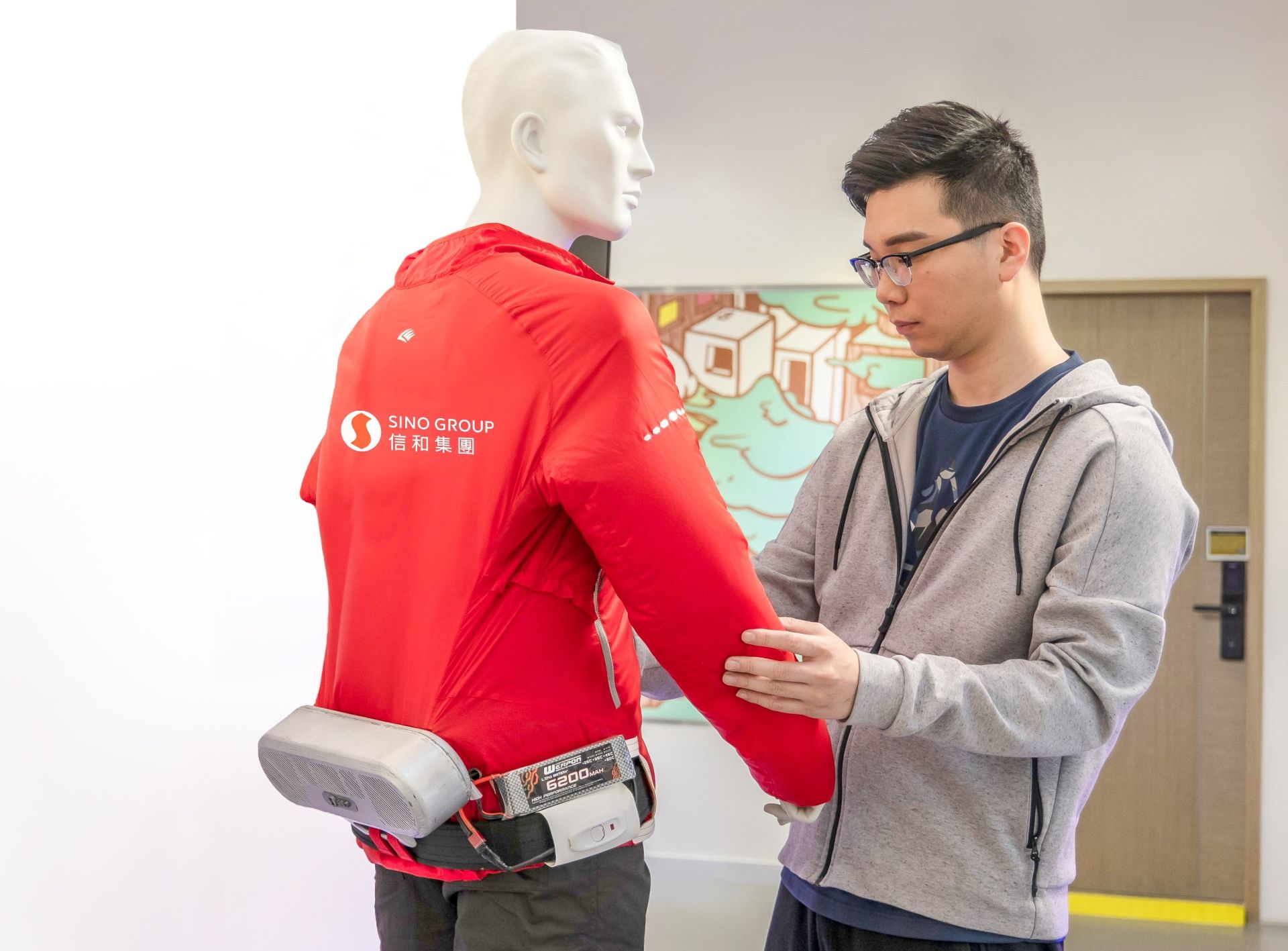

(Beijing and Hong Kong, 20 January 2016) Following the relocation of the prototype of the City Air Purification System (CAPS) (patent-pending) to Tsinghua University in Beijing from Hong Kong in July 2015, the system has undergone a series of testing in the new environment. The empirical results show that the system is able to sustain similar effectiveness in reducing particular matters, achieving an average reduction of 40% of concentration of air pollutants.
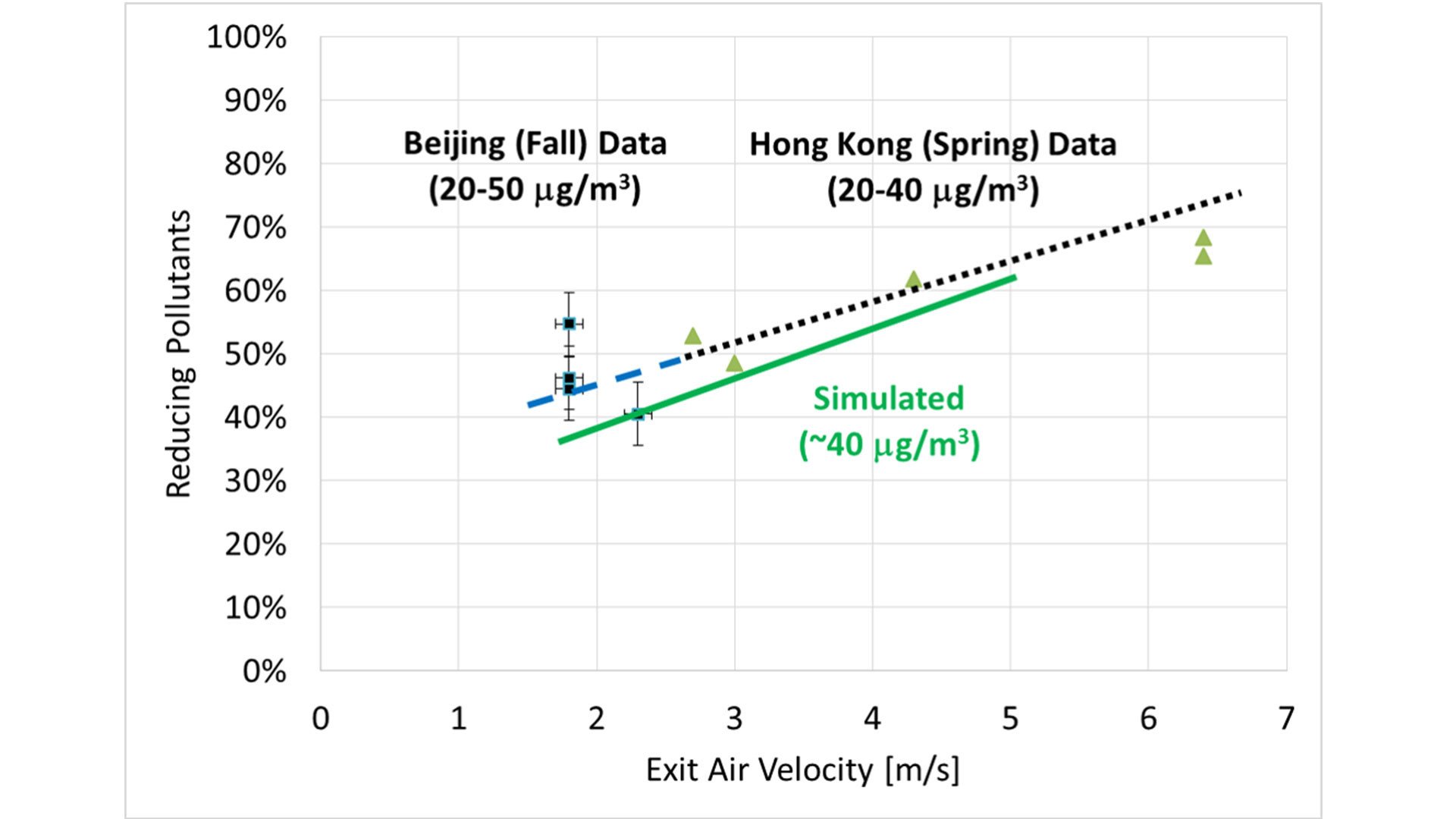
In Hong Kong, an effective way for CAPS to tackle with street canyon effect and roadside pollution is to maintain an air curtain, formed by higher outlet velocity. On the campus of Tsinghua University, where street canyon effect is less prevailing due to a lower tall building density, CAPS is tested in dealing with ambient pollution with lower outlet velocity. According to the result shown in Figure 1, the data collected from Tsinghua align with the performance trend in Hong Kong, substantiating that CAPS is capable of reducing pollution in a wide range of environment.
In addition to the encouraging empirical data and contributing to a healthier roadside environment in Tsinghua, the system has also achieved recognitions by industry pundits. It was recognised by the Hong Kong Construction Industry Council 2015 with the Innovation Award (Local Category). The judging panel, comprising a diverse group of local and overseas experts, has been impressed by the potential impacts and applicability of CAPS.
Secondly, an industry white paper describing the system effectiveness and technical background has been published and shared at a mainland conference organised between Heilongjiang Heating Ventilation and Air-Conditioning Council (黑龍江省暖通空調委員會), Heilongjiang Green Building Council (黑龍江省綠色建築專業委員會), China Civil Engineering & Architectural Society Heat Transfer Division (中國土木建築學會熱能動力分會集中供熱與熱計量專業委員會), CIBSE, the HKIE, ASHRAE and HKPolyU. In addition to demonstrating the robust technical design of the system, the paper addresses technical queries raised by the attending engineers, and elucidates the methodology in detail. Feedback received shows interests in the future testing plans, results and development of the CAPS in China.
The system has also been widely reported, including reputable media such as CCTV, The Guardian, Forbes and Bloomberg. World Insight, a round-up of world news and current affairs programme by the CCTV, has produced a special report on the system.
Meanwhile, the design team is working on the second generation, which focuses on enhancing overall system energy performance and filtration capability. System performance testing is also planned to roll out in Shanghai, Xi’an and other Chinese cities.